Mount Kilimanjaro is on every mountain climber’s bucket list. Not only is it Africa’s tallest peak, it’s also packed with beautiful scenery and exciting wildlife.
Although the mountain is talked about a lot, it still remains a mystery for both tourists and scientists.
Here are a few facts about Kilimanjaro we bet you didn’t know:
1. IT’S THE WORLD’S TALLEST FREE-STANDING MOUNTAIN
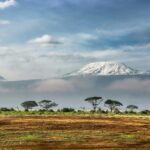
Mount Kilimanjaro stands on its own and isn’t connected to other smaller mountains.
Most mountains are created from tectonic activity underground; when two tectonic plates push up against each other, they push the ground upwards, creating mountains.
Free-standing mountains, like Mount Kilimanjaro, are usually the result of volcanic activity. Kilimanjaro is a dormant volcano with 3 volcanic cones, named Kibo, Shira, and Mawenzi.
2. IT LIES ON THE EQUATOR, YET HAS GLACIERS
Any land on or near the equator is supposed to be either hot and humid, or hot and dry. You can’t expect cold temperatures in countries located near the equator, yet there are glaciers on Kilimanjaro.
Parts of Kilimanjaro freeze during certain parts of the year due to cold temperatures.
3. PARTS OF KILIMANJARO MAY ERUPT AGAIN
Mount. Kilimanjaro as a whole is considered a dormant volcano, meaning it can still erupt again, although there hasn’t been any volcanic activity on it in over 200 years.
Two of its volcanic cones, Shira and Mawenzi, are cut off from the lava supply and have gone extinct. Although Kibo hasn’t erupted in over 10,000 years, scientists believe it still can, yet is considered dormant.
4. THE FIRST ASCENT WAS MORE THAN A 100 YEARS AGO
The first people to climb Kilimanjaro was a geologist named Hans Meyer, a local guide called Yohani Kinyala Lauwo, and Ludwig Purscheller who was an Austrian climber.
It took Meyers three tries to make it to the top. In his first try, he had to turn away after reaching the base of Kibo. In his second attempt, he was imprisoned by locals on the mountains.
He finally succeeded in his third try in 1889 with the support of his team. The current Marangu route is based on the path Meyer’s took when climbing the mountain.
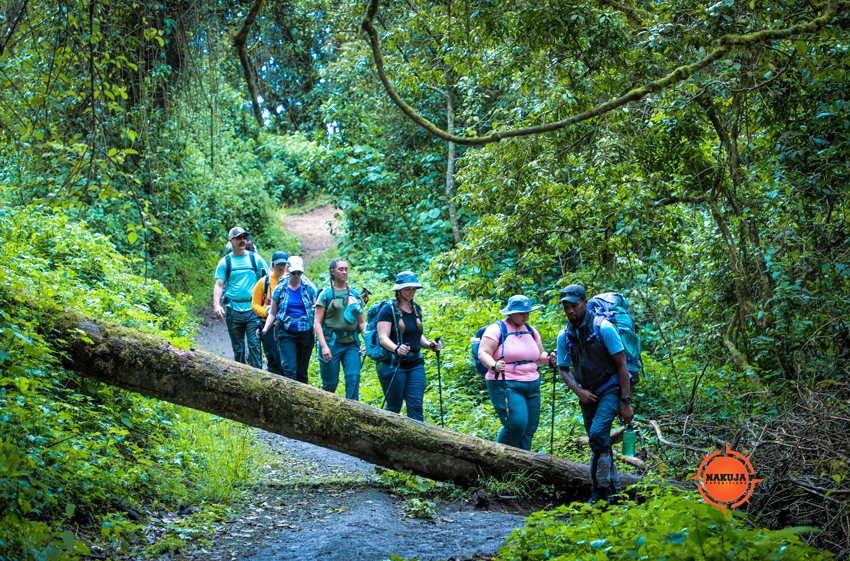
If you’re an avid climber eager to take on the mammoth that is Mount kilimanjaro climbing tours, you should book a climbing tour with Nakuja Expeditions.
Nakuja Expeditions organizes climbing tours on Kilimanjaro through the Mahame route, aka the Whiskey Route, and the Lemosho tour package.
Contact us +255-713-658-555 or +255-787-658-555 by phone. You can even drop us an email at info@nakujaexpeditions.com for more information.



Mount Kilimanjaro is on every mountain climber’s bucket list. Not only is it Africa’s tallest peak, it’s also packed with beautiful scenery and exciting wildlife.
Although the mountain is talked about a lot, it still remains a mystery for both tourists and scientists.
Here are a few facts about Kilimanjaro we bet you didn’t know:
1. IT’S THE WORLD’S TALLEST FREE-STANDING MOUNTAIN
Mount Kilimanjaro stands on its own and isn’t connected to other smaller mountains.
Most mountains are created from tectonic activity underground; when two tectonic plates push up against each other, they push the ground upwards, creating mountains.
Free-standing mountains, like Mount Kilimanjaro, are usually the result of volcanic activity. Kilimanjaro is a dormant volcano with 3 volcanic cones, named Kibo, Shira, and Mawenzi.
2. IT LIES ON THE EQUATOR, YET HAS GLACIERS
Any land on or near the equator is supposed to be either hot and humid, or hot and dry. You can’t expect cold temperatures in countries located near the equator, yet there are glaciers on Kilimanjaro.
Parts of Kilimanjaro freeze during certain parts of the year due to cold temperatures.
3. PARTS OF KILIMANJARO MAY ERUPT AGAIN
Mount. Kilimanjaro as a whole is considered a dormant volcano, meaning it can still erupt again, although there hasn’t been any volcanic activity on it in over 200 years.
Two of its volcanic cones, Shira and Mawenzi, are cut off from the lava supply and have gone extinct. Although Kibo hasn’t erupted in over 10,000 years, scientists believe it still can, yet is considered dormant.
4. THE FIRST ASCENT WAS MORE THAN A 100 YEARS AGO
The first people to climb Kilimanjaro was a geologist named Hans Meyer, a local guide called Yohani Kinyala Lauwo, and Ludwig Purscheller who was an Austrian climber.
It took Meyers three tries to make it to the top. In his first try, he had to turn away after reaching the base of Kibo. In his second attempt, he was imprisoned by locals on the mountains.
He finally succeeded in his third try in 1889 with the support of his team. The current Marangu route is based on the path Meyer’s took when climbing the mountain.
If you’re an avid climber eager to take on the mammoth that is Mount kilimanjaro climbing tours, you should book a climbing tour with Nakuja Expeditions.
Nakuja Expeditions organizes climbing tours on Kilimanjaro through the Mahame route, aka the Whiskey Route, and the Lemosho tour package.
Contact us +255-713-658-555 or +255-787-658-555 by phone. You can even drop us an email at info@nakujaexpeditions.com for more information.